
History of national
standardisation
From the Romanian Electrotechnical Committee in 1927 to standards for artificial intelligence in 2024: three periods and 17 milestones.
Index of the 17 milestones
The interwar period
Romania builds its first national technical structures and, from the 1920s onwards, links up with the international standardisation organisations.
1927Romanian Electrotechnical Committee
The Romanian Electrotechnical Committee is established. It lays the foundations of national electrotechnical standardisation and is the first organised form of technical norm-setting in Romania.
In 1928, Romania becomes a member of the International Electrotechnical Commission (IEC).
1928Romanian Industry Norms Commission
The first body devoted to Romanian industrial norms is set up, extending standardisation beyond the electrotechnical field.
1937–1938Romanian engineers adopt standards of national scope
Within the General Association of Engineers of Romania (AGIR), standards of national scope are adopted a decade before the Standardisation Commission is created.
State standardisation
After 1948, standardisation is organised centrally, the first state standards appear and Romania enters the international standardisation scene.
1948Standardisation Commission
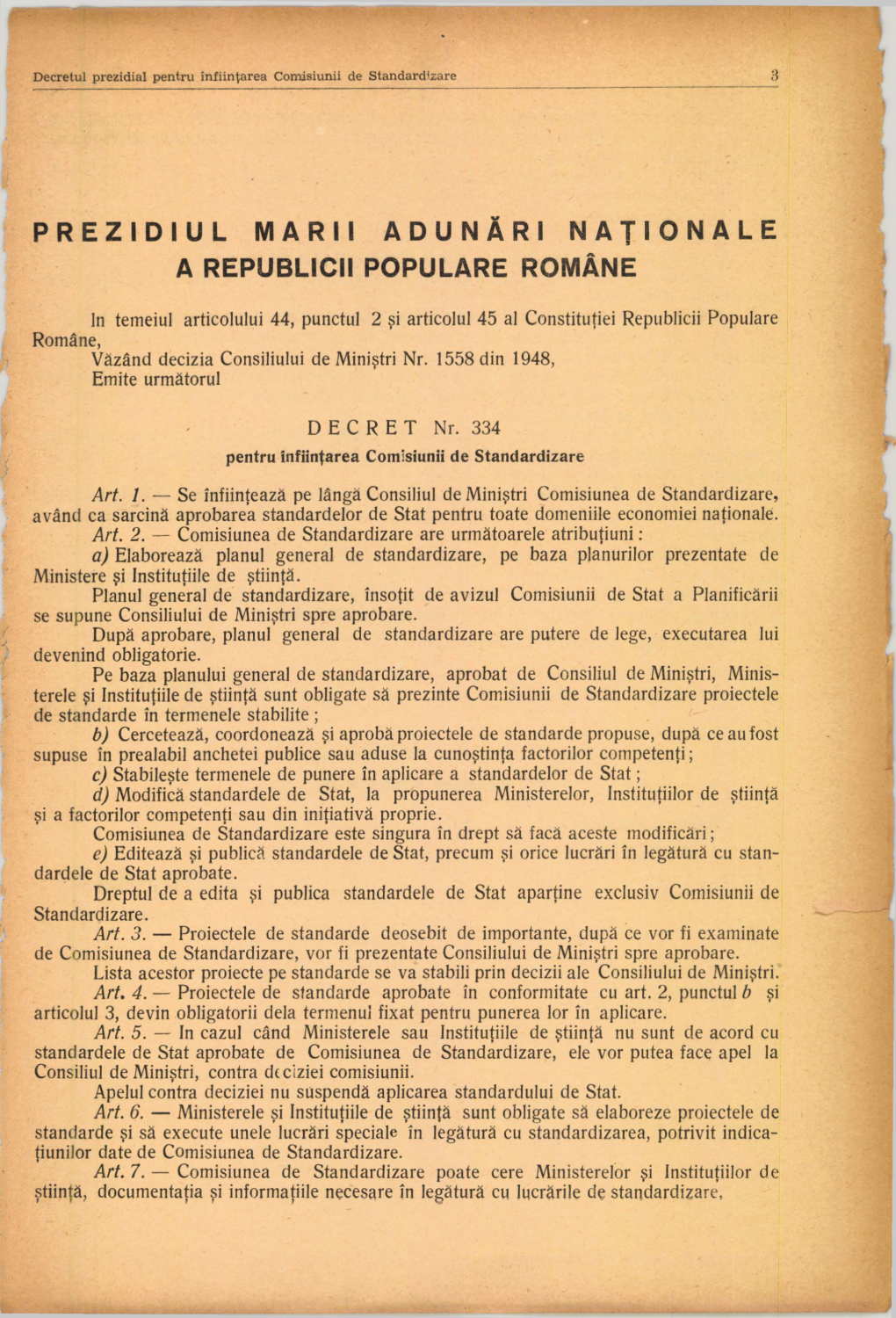
The Standardisation Commission is established under the Council of Ministers of the Romanian People’s Republic, as the first central body to coordinate the field.
Decree No. 334 of 19 November 1948. The Romanian Normalisation Centre of AGIR had been created in February of that year.
1949The first state standards come into force
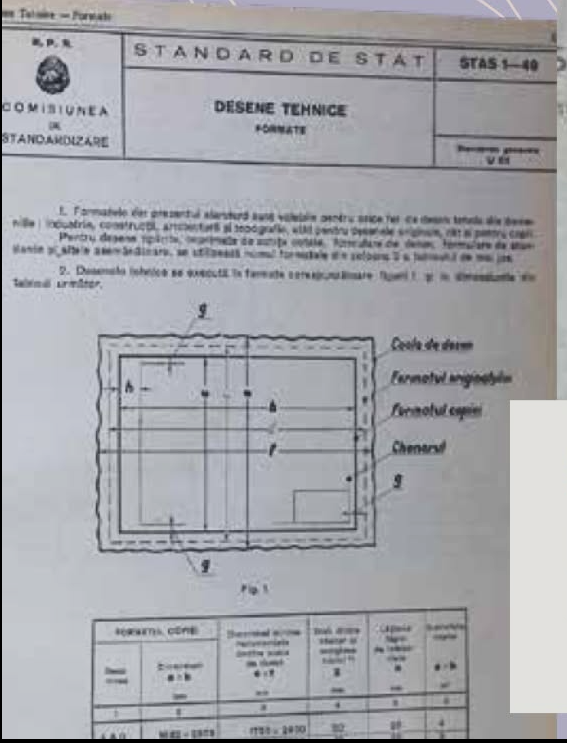
On 1 June 1949, STAS 1 – “Technical drawings: formats” comes into force, the first in the series of Romanian state standards. STAS 2, on the scales of technical drawings, enters into force the same day.
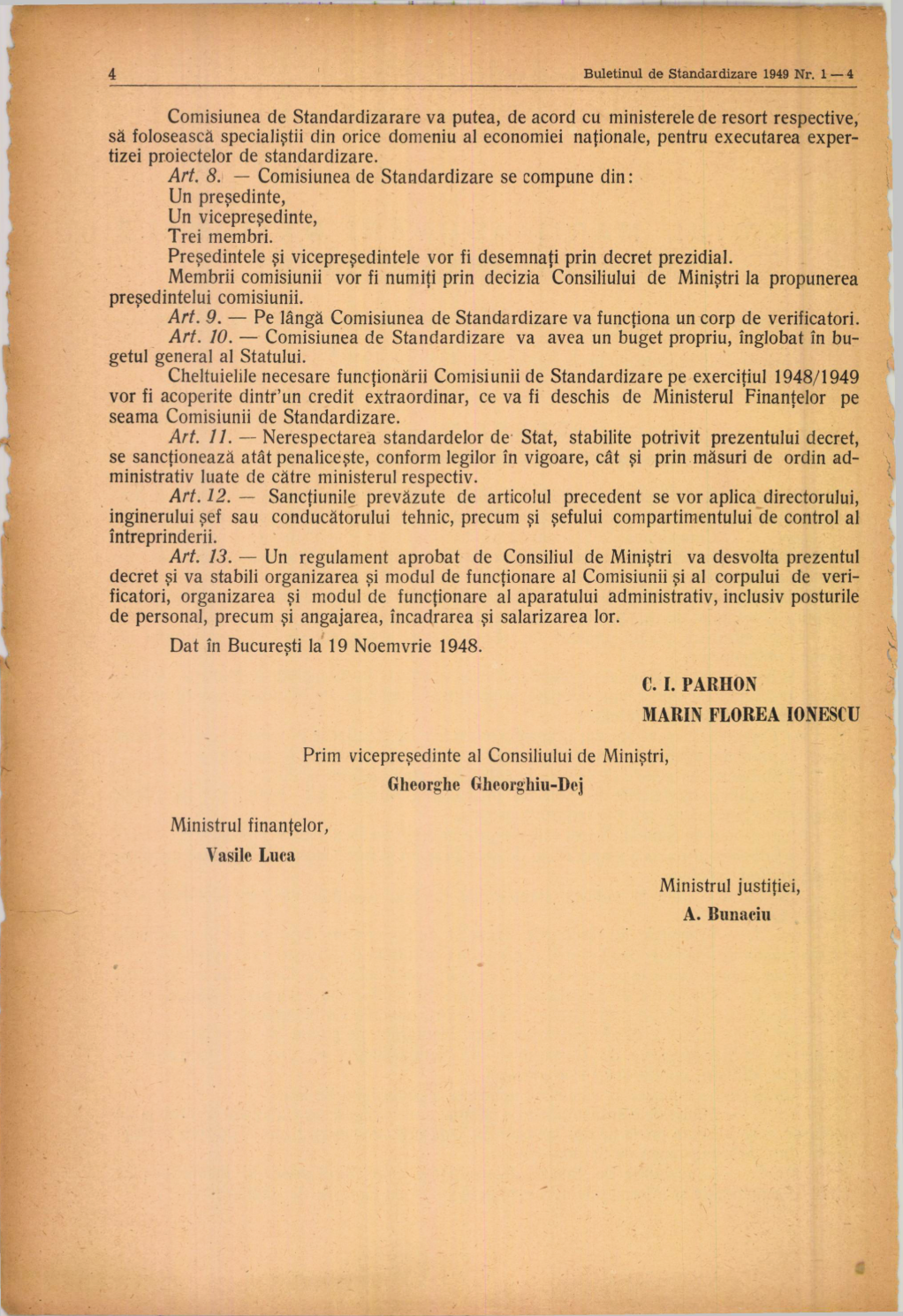
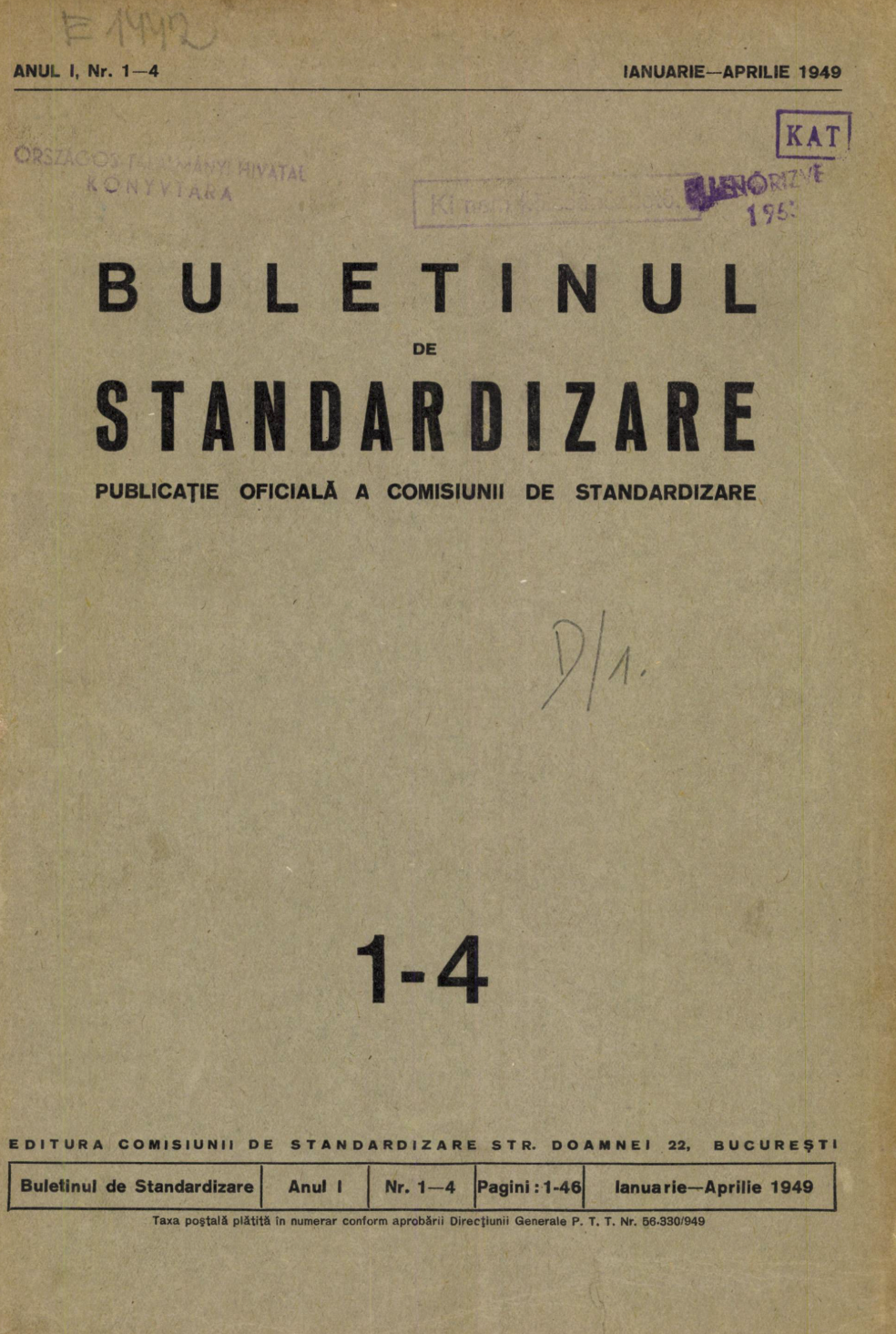
The first “Standardisation Bulletin” also appears in 1949. It publishes draft standards for public enquiry, lists of approved standards, and official acts and studies from the field.
1950The Standardisation Commission becomes an ISO member
Romania joins the International Organization for Standardization and has taken part in developing international standards ever since.
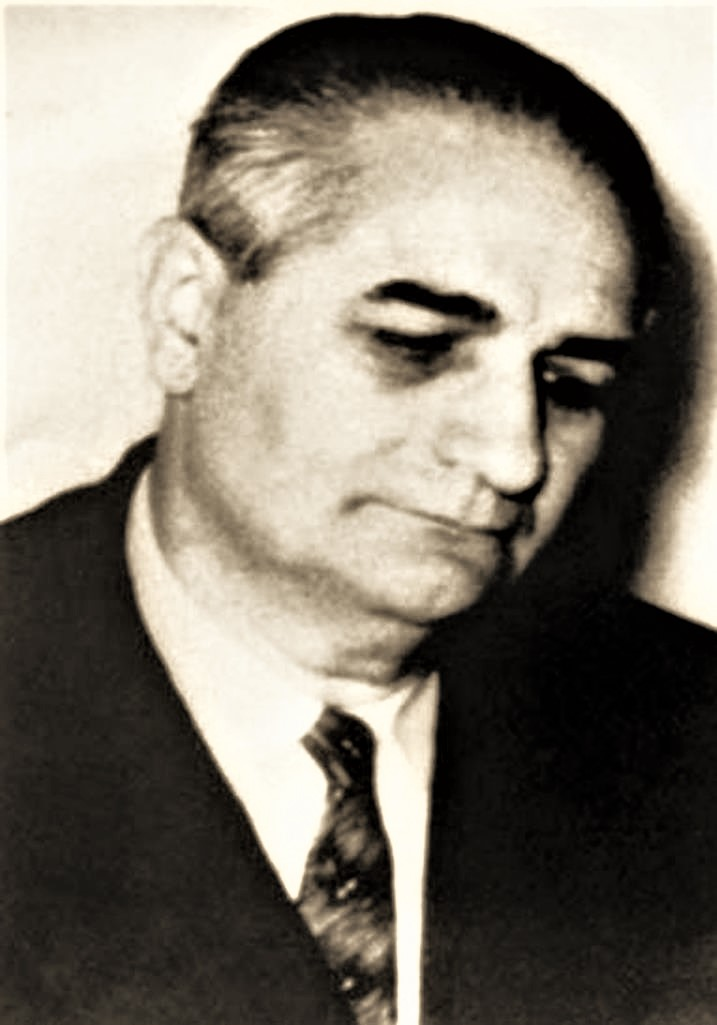
1964Remus Răduleț is elected President of the IEC
In 1964, the Romanian academician Remus Răduleț is elected President of the International Electrotechnical Commission (IEC). He leads the organisation from 1964 to 1967, having previously served as its Vice-President.
1970The Romanian Standardisation Institute is established
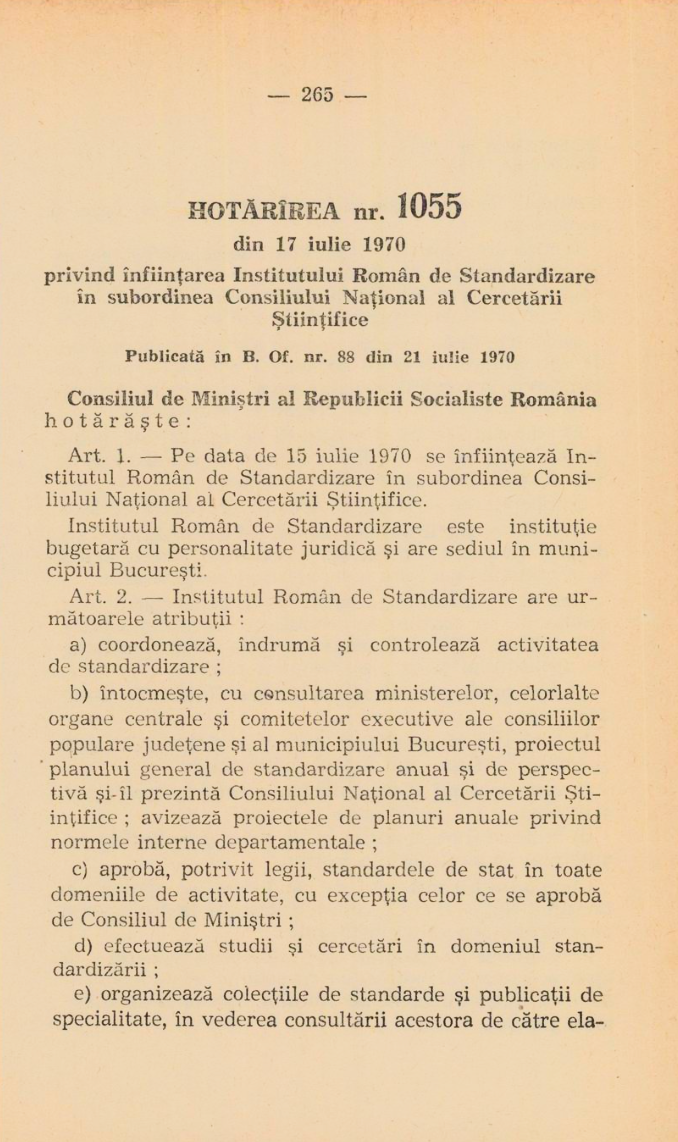
IRS is set up under the National Council for Scientific Research and takes over the coordination of national standardisation.
Council of Ministers Decision No. 1055 of 17 July 1970.
Opening to Europe
After 1990, Romanian standardisation is put on a new footing: joining the European organisations, becoming an association and aligning with European Union law.
1991Affiliation to CEN and CENELEC, and participation in ETSI
The Romanian Standardisation Institute becomes an affiliate member of CEN and CENELEC. From the same year, Romania is also represented as a member of ETSI, the European telecommunications standards organisation.
Decision No. 733 of 14 October 1991.
1992From STAS to SR
Ordinance No. 19 of 1992 provides for the move from state standards (STAS) to Romanian standards (SR). State standards already in force remain valid until they are revised and converted into Romanian standards.
1998The Romanian Standards Association is founded
National standardisation moves to the European associative model: ASRO is created as a private-law body of public interest.
Government Ordinance No. 39 of 30 January 1998; recognised as the national standardisation body by Government Decision No. 985/2004.
2006ASRO becomes a full member of CEN and CENELEC
Through ASRO, Romania takes part, with voting rights, in developing European standards within CEN and CENELEC.
2015Adoption of Law No. 163/2015
The law on national standardisation sets the current legal framework for organising standardisation, for Romania’s participation in European and international standardisation, and for applying Regulation (EU) No 1025/2012.
201890 years of national standardisation, 20 years of European standardisation
ASRO marks nine decades of Romanian standardisation and two decades of work in the European standardisation system.
2019CEN-CENELEC General Assembly in Bucharest
ASRO hosts the CEN-CENELEC General Assembly in Bucharest, the most important European standardisation event ever held in Romania.
2020New premises, owned by ASRO
ASRO moves into new premises owned by the association — a solid base for its standardisation work in the years ahead.
2024Artificial intelligence enters the standardisation programme
Through technical committee ASRO/CT 401, Romanian experts take part in standardising artificial intelligence. In August, ASRO announces in the Standardisation Bulletin the adoption of SR ISO/IEC 42001:2024, the standard for artificial intelligence management systems.
Romanian standardisation today
Nine decades of national standardisation have built the quality infrastructure of the Romanian economy. Today, ASRO is the national standardisation body, a full member of the European organisations CEN, CENELEC and ETSI and a member of the international organisations ISO and IEC. The current legal framework is set by Law No. 163/2015, and its work is carried out together with ASRO members.
